Weekly Hydroponic Harvests at Leafy Green Farms
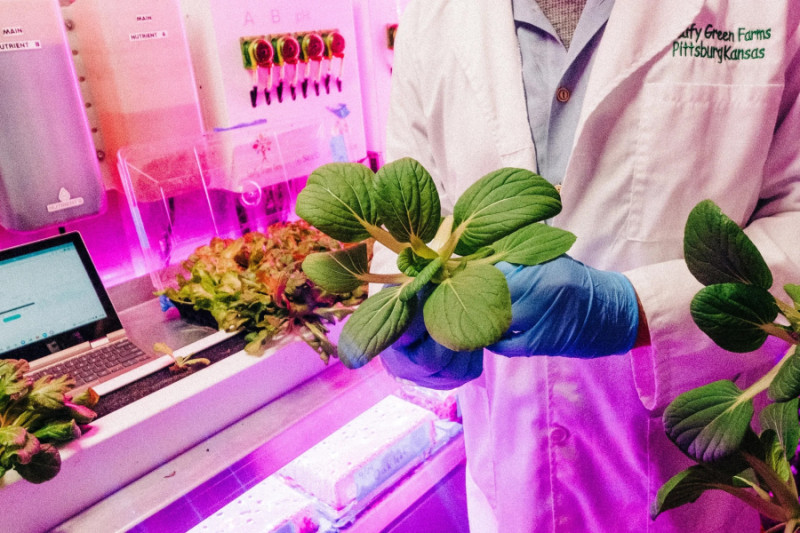
What if I told you it was possible to harvest a fresh crop every week regardless of the weather? It might sound like an agricultural pipe dream, but it’s a reality Brad Fourby has created at Leafy Green Farms — a veteran-owned, vertical hydroponic farming operation capable of delivering fresh, leafy vegetables all year round.
Founding Leafy Green Farms
Brad got the idea for these farms while he was living in California and working in aquaponics — a type of agriculture that, like hydroponics, grows plants in a water-based nutrient solution, but also includes fish as a part of the ecosystem.
In searching for a way to grow enough to support a single family, Brad found a model for self-sustainable hydroponic farms that could be grown and harvested inside specially designed shipping containers.
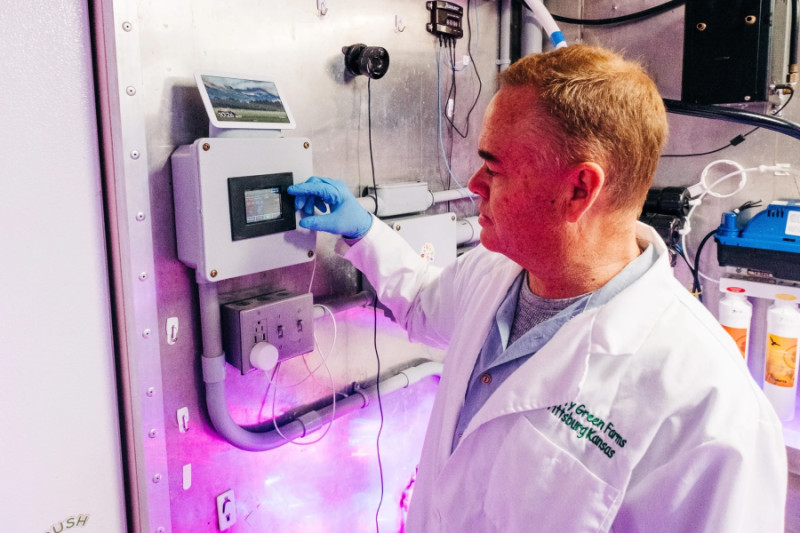 “I could never get the math right with the amount of room that was needed to grow enough food,” Brad explained. “Then during my searches one day, I saw an advertisement for a farm like ours, and immediately I got it. I can grow enough food in here — more than a family needs — enough for a business to be self-sustaining.”
Inspired by this design, Brad developed a draft of his business plan. But it wasn’t until the COVID-19 pandemic that he took the leap of faith and moved to Pittsburg to prove his concept could help feed the local population of about 20,000.

Now after four years of operation, Brad and his team have 14 shipping container farms, each capable of growing rows of leafy plants each week, including red butter lettuce, romaine, spinach, arugula and basil.
The Benefits of Vertical Hydroponic Farming
Thanks to the enclosed design of these hydroponic farms, the plants are protected from many of the stressors of traditional farming, such as the unpredictability of pests and the weather.
“It’s windy today and kind of muggy, but our food looks perfect,” Brad said. “We don’t use any pesticides or herbicides.”
Director of Communications Leslie Montee also suggested their setup allows Brad more opportunities to try new approaches with each harvest.
“[With traditional farming], there’s not really room for error. Here you can kind of experiment with things,” Leslie said. “Brad can try to grow spinach. He can fail one week, and then he can just start over and try something new the next week.”
Feeding the Community
All of Leafy Green Farms’ successful harvests go right back into supporting the community, and they pride themselves on delivering their produce hyper-locally. Though they recently began delivering as far as Kansas City, their focus remains on raising awareness of the food deserts around Pittsburg and providing the freshest vegetables possible.
“When we deliver our food, it looks different than everyone else's,” Brad said. “It hasn't been packaged, it hasn't traveled 1,000 or 2,000 miles. I mean, it's literally still twitching, it's so fresh.”
Partnering with the Kansas Food Bank and the Kansas Local Food Purchase Assistance Program, Leafy Green Farms helps provide local charities with the pristine produce they wouldn’t receive otherwise.
“[Food kitchens] are usually the last ones to be thought of,” Leslie explained. “So for them to have what we can provide — that's something that they normally would not have access to.”
Hydroponic Farms for Local Schools
Leafy Green Farms is also helping schools develop their own hydroponic farms. Once Brad has ensured that each school meets water and power requirements, he sets up the farms so schools can provide students with hands-on learning experiences. And thanks to their self-sustaining nature, it’s entirely up to teachers and students to do what they like with each farm.
“We'll place it on their campus, and after Brad gets it up and running, they take charge of it, and they do whatever they want with it,” Leslie said. “Whether it's a business teacher or a horticulture teacher, they kind of take control of it and do all kinds of stuff with it.”
At the end of each week, the students can decide what to do with their harvest, whether that’s using it in their school cafeteria or applying their business curriculum and selling it in the community.
“Some of the schools will take the excess to the farmers market,” Leslie said. “They'll get their earnings, and that's how they buy their seeds or pay for water or whatever they need. They have their own business plan that way.”
Farming and Accessibility
But it’s not just students who can benefit from these farms. Their design also provides a different approach to agriculture that can make it more accessible to those who might struggle with traditional farming tasks. As veterans of the Navy and Air Force, respectively, Brad and Leslie appreciate the potential these farms have for those who have recently left the military.
“If you have disabled veterans who might have ambulatory issues or something, they can't traditional-farm very easily,” Leslie explained. “Instead, they can go into farms like ours — climate-controlled, ADA-accessible — and you don't have to do a lot of big lifting. There are studies that show it’s beneficial for veterans to farm in this manner.”
Engaging Curiosity in the Community
Brad and Leslie encourage anyone with an interest in their work to schedule a tour and learn how their hydroponic farms function day-to-day.
“Anyone who ever calls or emails — we never turn them away,” Leslie explained. “We’ve had 4-H, retiree clubs, hospital groups, city groups — probably any demographic you can think of has come through the door just to learn more, and they don't really have an agenda. They're just curious.”
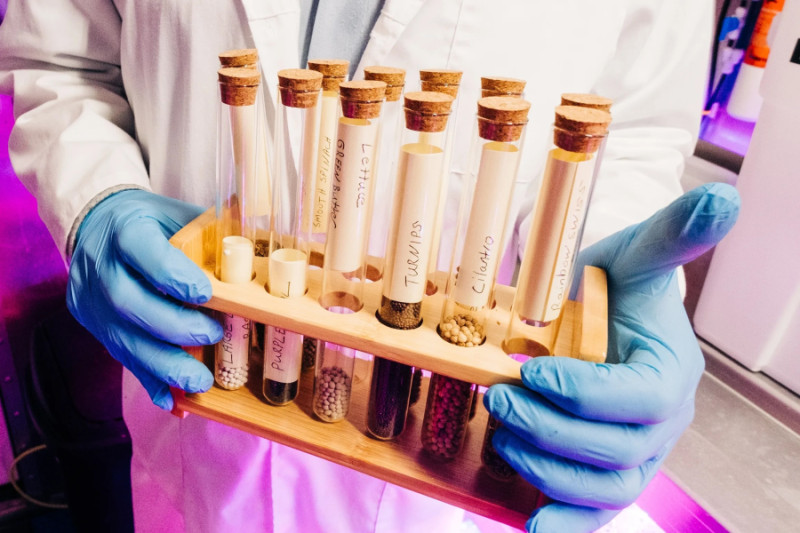
Whether it’s inquisitive kids, interested adults or fellow farmers, Brad and Leslie love sharing what they do and demonstrating that the future of agriculture doesn’t have to be a zero-sum game.
“It's just a matter of sharing ideas — you know, sharing those dreams, those passions. I think anyone that's looking at small farms, micro farming, vertical farming — I encourage all of it. I think there are so many great aspects to agriculture that people are making successful.”
To learn more about their hydroponic farms or arrange a tour, check out Leafy Green Farms on their website and on Facebook.
More About the Future of Kansas Farming