What Sustainability Means at Winsor Family Farm
There’s a lot more to farming than meets the eye. Farmers work behind the scenes year-round to ensure their crops are produced sustainably and with the best management practices to fit their individual farms.
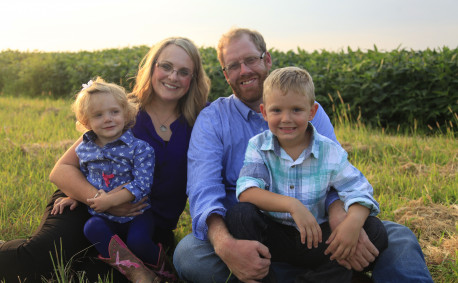
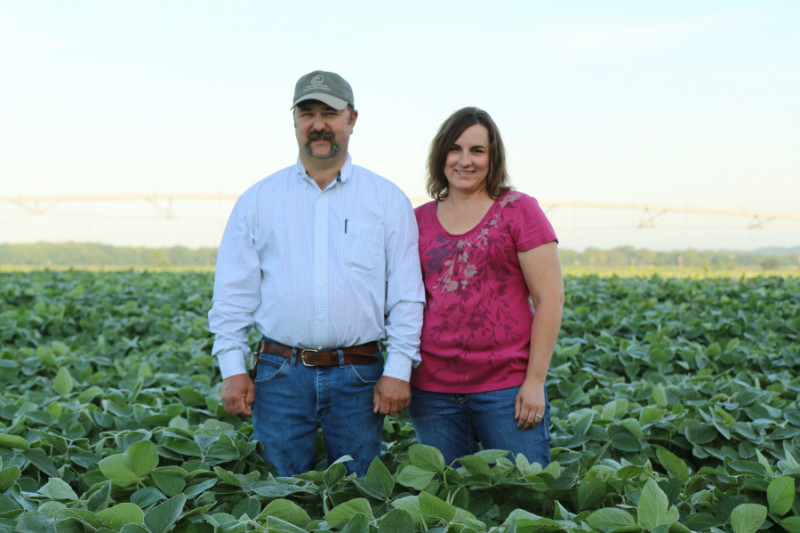
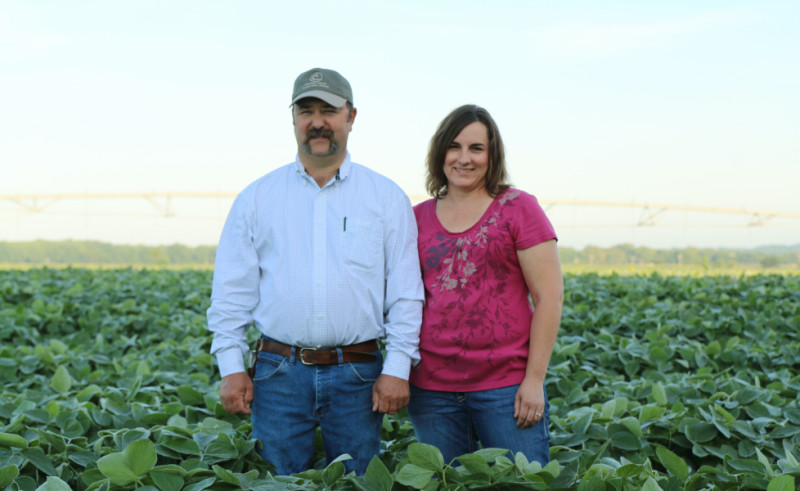
Andy and LaVell Winsor are a husband-and-wife farming team who work alongside Andy's family. Andy and his brother are the third generation to continue their family’s farming heritage in the Kansas River Valley near Topeka. They grow soybeans, corn and wheat. A lot goes into daily operations on their family farm, before their harvested crops hit the market.
“Even when you’re in the middle of the cycle you’re thinking about what you’re going to do for the next cycle,” LaVell said. “There’s something about that, that just keeps you going.”
The planting process doesn’t start in the spring. It actually starts before the current year’s crop is even out of the ground. Before farmers can sow seed, they must determine which crops to plant in each field. Once the crop is chosen, farmers must then decide which variety of seed to use out of the hundreds of varieties available. When considering seed, farmers look at performance data of each variety and how long the variety must grow before it’s ready to harvest. With all those things to consider, farmers must also make their management decisions based on their profit margins.
“The farm has to be financially successful, which means profitable, to be able to be sustainable for the long term,” LaVell said.
Farmers are busy throughout the year, so there’s really no “off” season. When there are no crops growing in the fields, farmers like the Winsor family attend meetings and conferences to continue education on their trade and expand their network. They also perform soil tests to understand what improvements and nutrients each field needs before the next growing season.
“Farming is a yearlong process that we strive to improve from year to year,” Andy said. “I really enjoy the differences from one year to the next and making changes and trying new things to improve each year and for the long term.”
Soil conservation is an important component in the long-term success of a farm. The Winsors incorporate grass waterways and terraces to decrease soil erosion in their fields. Grass waterways are natural drainage systems, usually located in areas where water normally collects in fields. They act as filtration strips for sedimentation and the waterway channel provides an outlet for terraces. Terraces consist of ridges and channels, they are made from soil and catch rainfall as it moves down a slope, which prevents large accumulation of water flow on the surface of slopped fields.
“We employ many different conservation practices on our farm,” Andy said. “My dad and grandpa employed terraces and waterways and now we have improved on those by adding more terraces where they are needed, and we perform regular maintenance on our terraces and waterways. We also do cover crops and we’re finding that the cover crop mixes that we’re currently using are controlling erosion a lot more than just terraces and waterways alone.”
Cover crops prevent soil erosion by forming a protective canopy that reduces the impact of raindrops on the soil surface, which reduces soil breakdown.
“To me, sustainability means to have a viable farm that can be passed on to future generations, that’s one reason we focus on soil health and fertility,” Andy said. “Everything we have is from the soil, you need healthy soil to grow crops in.”
Another way families like the Winsors help prepare for the future is through succession planning.
“The biggest picture of sustainability is whether we can pass along our farm to the next generation,” LaVell said. “My background is financial so the leg that I always bring into it is that the farm needs to profitable in order to be sustainable. There are a lot of pieces to sustainability. It’s the health of the soils, health of the land and being profitable, so we can make investments and continue to operate for future generations.”
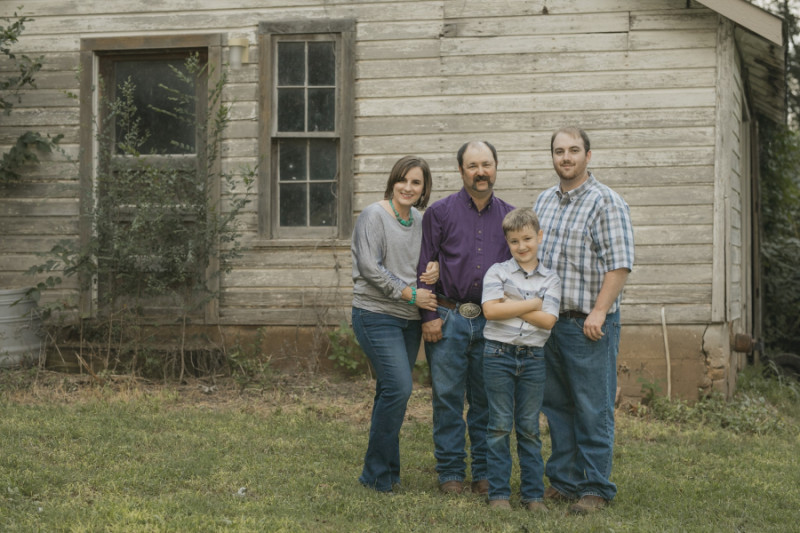 In order to smoothly pass on a family farm to the next generation, a succession plan, which provides guidance for individuals moving into and out of the farm operation, is usually composed by the family. Succession plans cover critical issues like transitioning asset ownership from one generation to the next, planning shifts in management and anticipating events that could disrupt management and ownership succession.
“None of us think we’re going to retire or pass things on, but it is really important to think about succession on a farm because it does take a long time,” LaVell said. “Think about how long a family might be farming, maybe mom and dad have been farming for 40 or 50 years. So, to pass on all of that knowledge and information, it’s a long process. But it’s very important and the most successful farms are the ones that start to actively think about it ahead of time.”
In addition to all of the things farmers do behind the scenes, they have to decide where to market their crops, where to store grain and how long to store it for.
Farming is a yearlong cycle with many challenges along the way but farmers like the Winsors love what they do.
“One thing I want people to know about farming is that there are a whole lot of people out working hard to grow food for everyone,” Andy said.
“I would like people to remember that about 96 percent of farms are family farms, meaning my husband and father in law are making decisions for our farms,” LaVell added. “Our family is making those decisions and that’s valuable and important for us to maintain.”
Through sustainable practices like soil conservation and succession planning, the Winsors hope to provide future generations with continuing bounty from their family farm.
This article was written by Shelby Berens, an intern with the Kansas Soybean Commission.
Meet More Farm Families