Putting the Pig First: An 11-Year-Old’s Lessons from the Show Ring
Like many kids her age, 11-year-old Kennedy Keatley likes to play — everything from board games to softball and basketball. Her favorite subjects are science and social studies. Her family lives on three acres — what her mom, Sarah, calls a “funny farm.”
“We've got some miniature donkeys, some chickens. We had a couple head of cattle. We have rabbits, which is what my son likes. And then we have the pigs,” Sarah said. “That's really what Kennedy fell in love with.”
Pigs have become Kennedy’s passion.
“I like their personalities,” she said.
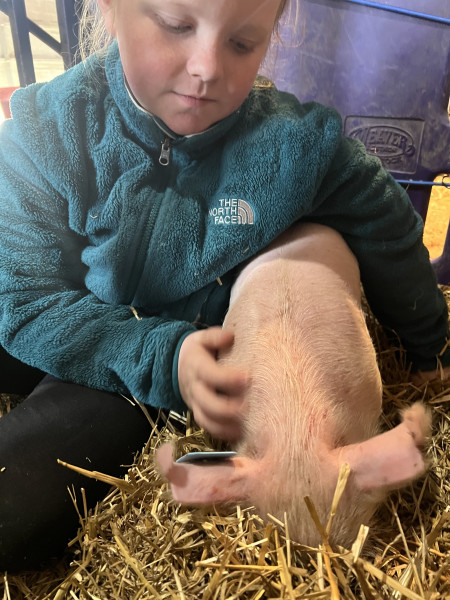
Pig People
The family’s pig project grew out of Kennedy’s participation in 4-H.
“I showed cattle and dairy goats, and then I showed some pigs,” Kennedy said. “It clicked.”
Kennedy was nervous to tell her mother she didn’t want to show cattle anymore. Their barn was outfitted for cattle, and Sarah hoped Kennedy and her younger brother, Avery, might take to them. But when Kennedy finally told her, Sarah leaned in to her passion.
“So the barn got a renovation, and now we are pig people,” Sarah said.
Watching her daughter work with these animals, Sarah sees Kennedy’s natural affinity with them.
“Pigs have this personality that other livestock don't have,” Sarah said. “It’s fun to watch Kennedy know their quirks, what they like and don't like, and how to get them to respond to her. Some just have this natural giddyup-and-go. Some you have to work with a lot more than others.”
Working with pigs to show them in 4-H requires time and patience.
“When we first get them, they’re just all crazy,” Kennedy said. “You can't just run out there and expect them to do something. You have to practice, and you have to get to know them.”
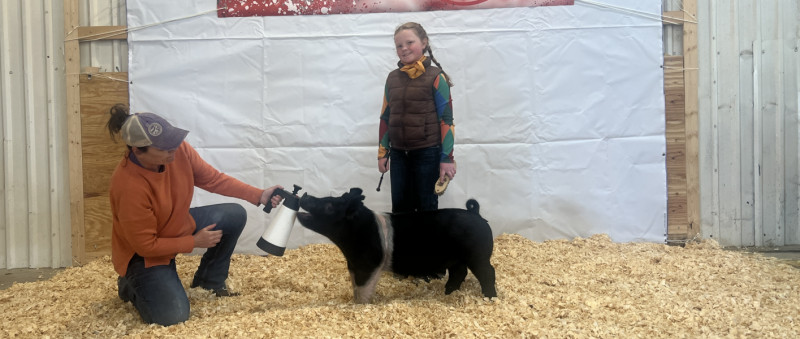
When Kennedy gets a new pig, she’ll spend weeks just sitting in its pen, letting the animal get comfortable with her. She’ll brush the animal to help it get used to grooming and interacting. When she senses the pig is ready, she’ll practice with it in the pen before working it outside.
“I don't make them do a lot at first,” she said. “I'll let them do their own thing for a while, and then we'll bump it up.”
In addition to training the animals, Kennedy grooms them, ensuring their skin and hair are properly conditioned.
“Pigs have dandruff and dry skin,” Kennedy explained. “You spray moisturizer on them. You usually want to do that every day just so their hair is nice and shiny.”
On competition days, grooming includes a thorough wash, conditioning and moisturizers.
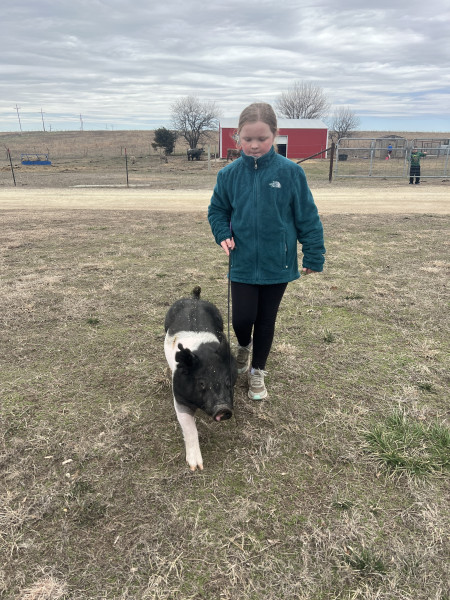
Showing in 4-H
Livestock shows feature three classes: market, breeding and showmanship. Each class focuses on a different element.
- In market class, judges evaluate the animal for its meat quality, considering its weight, muscling, frame and other physical traits.
- Breeding is also judged based on physical appearance but focuses on conformation to a standard, evaluating the animal as potential breeding stock.
- Showmanship is more about the relationship between the youth and the animal — how the contestant handles, grooms and presents the animal in the ring.
“I love showmanship,” Kennedy said. “It shows how much effort you have put into this. You can really tell by how your pig is acting, how you are acting. It's about your pig. But showmanship is mostly about how you are presenting you, how you are coming into that show ring. Like, you're here to win it.”
Projecting a winning attitude is part of the event.
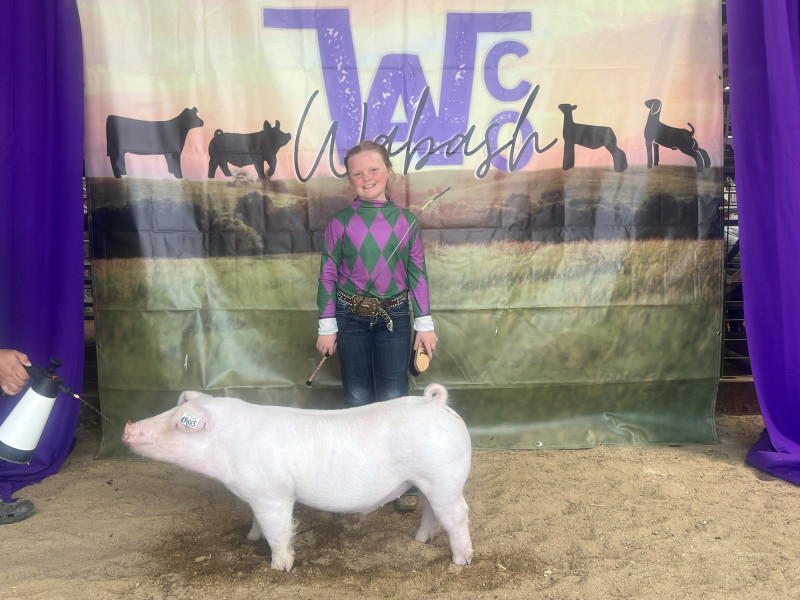
“You want your pig to look the best it can to the judge,” she said. “And then you want to look really nice. I'll wear jeans, show shirt and boots, and then I'll have my mean face on.”
Mean face?
“I have different faces,” she explained, then demonstrated her mean face, transforming from easy-going to laser focused.
Chin tilted, brows furrowed, lips taut, she conveyed the intensity she brings to the show ring. During competition, Kennedy watches the juniors and seniors — she competes as an intermediate — to see what the judges respond to.
“Some of the judges don’t like that much intensity,” she said.
If Kennedy gets called back, she’ll strategize with her mom about which face to take to the ring. She often builds to the “mean face.”
Kennedy puts in the work and brings intensity, but it all comes down to the judges.
“It's so subjective,” Sarah said. “It's one person's opinion on one day of the year.”
They had a Hampshire pig who won reserve breed champion at the Kansas State Fair, then placed seventh in her class at another competition weeks later.
Fleeting opinions aside, the victories are celebrated.
“That's a big deal if you get a reserve breed champion at state fair,” she said. “I’ve won belt buckles for winning showmanship, market and breeding at other shows, but at state fair I was so, so happy.”
She got a special ribbon, belt buckle and jacket for her state fair win.
Winning Isn’t Everything
But 4-H isn’t all about ribbons, belt buckles and jackets. Sometimes it’s about tough choices and life lessons.
The Kansas Junior Livestock Show in 2025 fell on Kennedy’s birthday weekend.
“There couldn’t have been a better birthday gift for this kid than to get to show pigs on her birthday at the Junior Livestock Show,” Sarah said. “It was a really exciting weekend for us. We were really looking forward to it.”
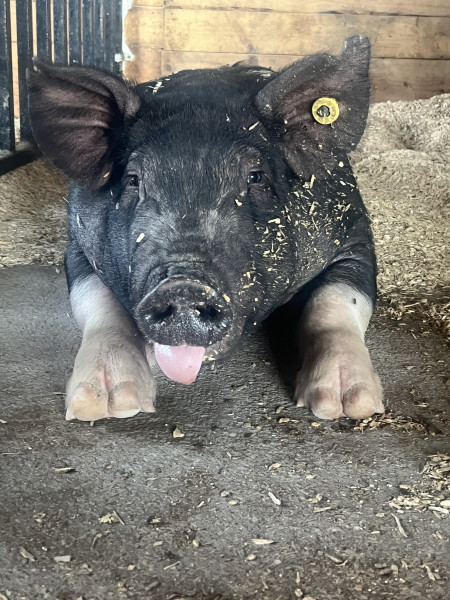
Kennedy was exhibiting pigs for market, breeding and showmanship. Buddy, a Yorkshire pig, was her showmanship pig. This would be Buddy’s last show, and the pair had started to click.
“She had put in countless extra hours walking, washing, feeding and walking him some more,” Sarah wrote on Facebook.
But when Kennedy went to get Buddy the morning of the market competition, he couldn’t walk. They called an official show veterinarian, Dr. Weaver, who said Buddy was in pain. She gave Kennedy two options.
“She said, ‘you can give the pig a shot and you can show it, or you don't have to give the pig a shot, and you don't have to show it,’” Kennedy recalled.
The proposed medication would alleviate Buddy’s pain, but is considered performance enhancing, so if Kennedy showed Buddy and he was drug tested, the family would be banned from the show for a year. Taking Buddy home would spare him further stress, but he would remain in pain until his leg healed on its own.
“I said, ‘I want to give that pig a shot, but I don't want to show it,’” Kennedy said. “I just wanted what's best for my pig.”
Sarah got emotional.
“Kennedy didn't even look at me. She just looked at Dr. Weaver and said to treat the pig,” she recalled.
Dr. Weaver offered to inform the show officials, but Kennedy insisted she would scratch Buddy from competition herself.
“Dr. Weaver and I shed some tears because, first off, it was kind of emotional and upsetting that your pig is lame for no apparent reason. But second, Kennedy made a decision to put herself second and her animal first without consulting us, without hesitating,” Sarah said. “She knew in her heart what was best for that animal. She also knew it wouldn't be the right thing to do to be out there in the ring.”
To Kennedy, the solution seemed obvious. Her choice didn’t feel big in the moment.
“I had no clue why they were crying,” she said.
Valuable Lessons
Sarah appreciates that 4-H teaches her children responsibility, commitment and dedication. But the investment of time and money is substantial.
“Livestock projects are not cheap,” she said. “And I think anybody who shows livestock would tell you that. We are not making money. We are not breaking even.”
Sarah and her husband sometimes wondered if it was worth it.
Seeing her daughter make that tough decision — considering her animal’s welfare and making an ethical choice — Sarah felt the value of 4-H deeply.
“She would never have had that opportunity to make a decision putting herself last and putting her animal first if it weren't for this program,” she said. “That is something that is so unique to 4-H.”
Sarah sees this growth extend beyond the show ring. From speaking up for what’s right to respecting the advice of mentors to exhibiting kindness, Kennedy is navigating middle school with integrity.
“These are the life lessons that can’t be taught in a classroom,” Sarah wrote on Facebook. “They are learned through doing — through showing up, through heartbreak, and through choosing the harder right over the easier wrong.”
For Kennedy, the experience comes down to her passion for pigs. Despite the ups and downs, she loves the animals and the competition.
“I like meeting new people and spending time with old friends,” she said. “And I get to learn new experiences like how to show an animal. I learned how to breed a pig, and I got to do it myself too.”
If you know someone who would be interested in participating in 4-H, check out the organization’s website for details on finding a club, available projects and how to join.
Get to Know More Youth in Agriculture