Diversity on the Winter Farm
Success in real estate is all about location, location, location. On Kent Winter’s farm in Sedgwick County, success is all about rotation, rotation, rotation.
By rotating crops, Kent helps ensure the sustainability of his operation environmentally, financially and operationally. He farms five different crops throughout the year: winter wheat, grain sorghum, corn, soybeans and alfalfa. It’s a lot to manage, but Kent wouldn’t have it any other way.
“Having that diverse mix of crops spreads the market risk and helps spread out my workload for the growing season, especially during planting operation and fall harvest,” he said.
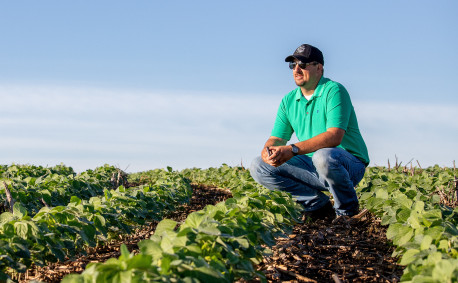
When we spoke, Kent was monitoring his wheat crop after a late April freeze, waiting on warmer weather for his corn seeds to sprout and getting ready to plant soybeans followed by grain sorghum.
“I try to stagger the schedule as much as I can. All of this has to be meshed with and adapted to what can sometimes be crazy and frustrating weather,” he said.
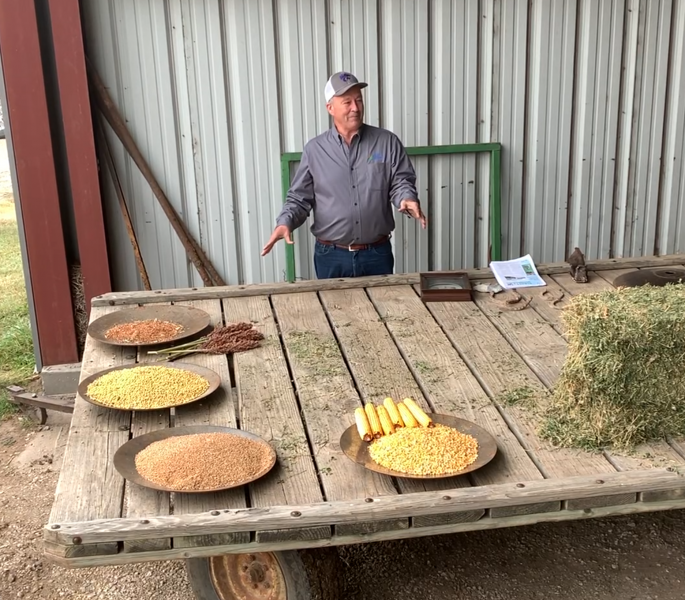 Rotation, rotation, rotation could also easily apply to Kent’s many roles on the farm.
“There are a lot of hats that have to be worn by a fulltime family farmer these days,” Kent said. “It’s great to be your own boss. But I have to own it. Most outcomes are directly related not only to my decision-making but also my ability to get things done in a timely manner. And then there are those times when weather issues directly collide with the best-laid plans.”
It all comes down to planning and execution.
Planning and Precision Agriculture
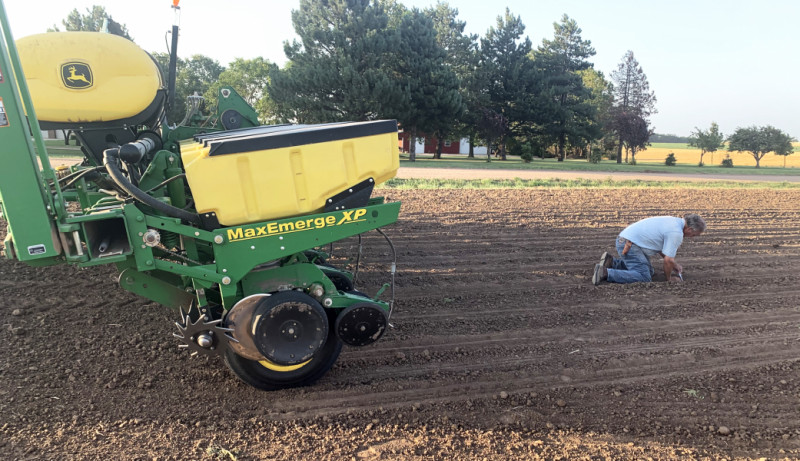
Each winter, Kent plans which crops to plant, how much to plant and where to plant them. While evaluating his options, Kent considers the health of his soil. Crop rotation can enhance yields and interrupt pesky weed, crop disease and insect cycles. Another method to help improve soil health is precision agriculture.
Precision agriculture is a thorough process that allows farmers to determine how best to care for their soil. First, during grid sampling, soil is collected at set spots in a field. Soil tests measure the nutrient and pH levels of each sample. Then, an agronomist analyzes the results and develops a custom prescription of fertilizer or lime for each section of the land. Finally, variable rate technology delivers the precise nutrients at the precise locations in each field.
“The whole idea is to up the efficiency of the applied nutrients so we’re only using what we need. It’s good for the environment and it’s good for my pocketbook,” Kent said.
The trick is, there’s no one right answer from field to field or year to year.
“It’s an elusive moving target. Every year is different,” Kent said.
Although Kent is a seasoned farmer, he summed it up this way: “I don’t have 38 years of experience. I have one year of experience 38 times.”
Sweet Corn
One offshoot of the operation is a project Kent and his wife conceived of in the early 1990s for their children to grow and sell sweet corn, which is the corn we buy on the cob during the summer, as opposed to other types of corn grown as livestock feed. The goal was to create an additional revenue stream to help fund their children’s education, while providing its own set of lessons.
“It wasn’t just strictly for the monetary value. Our hope was this project could be used to teach our children how to take responsibility and see things through to fruition,” Kent said.
Planting the sweet corn added yet another level of complexity to Kent’s schedule. He staggers the sweet corn planting dates — 10 in all — so there’s a rolling harvest as the corn ripens.
“In many ways it’s similar to being a vintner. In timing the harvest, you have to wait until it’s ready and at maximum sweetness. Then you have a three-day window to get that sweet corn harvested at the peak of its flavor,” he said.
The trick is raccoons also have that same window.
“You cannot outsmart racoons. They know when it’s ready and they get there the night before you do. We had to adopt the philosophy: You simply plant enough for everybody,” Kent said. “The best-fed racoons in Sedgwick County can be found shortly after dark in my sweet corn patch.”
Today, Kent’s youngest child is in college and the sweet corn patch is still going strong.
“My wife won’t let me give it up,” Kent said with a laugh.
He doesn’t seem to mind because when the snow is falling, he can still enjoy crisp, juicy corn from the freezer.
Zoo Food
Another branch of Kent’s farm is his haying operation. He supplies the Sedgwick County Zoo in Wichita with alfalfa hay for the animals to eat.
Kent has been supplying the zoo for about 30 years and currently provides 2,000 bales a year, which is no easy feat. The zoo requires small square bales of hay. Baling small squares is more labor- and time-intensive than baling round bales or larger square bales.
“It takes double the amount of time to get small squares of hay baled and put into the shed. Plus, alfalfa has to be baled at night because baling during the day shatters the leaves,” he said. “I get a great deal of satisfaction from getting alfalfa put up well. Getting high quality alfalfa into the bale is not easy to do and is highly weather-dependent, but it gives you a nice feeling of accomplishment if you get it done.”
Another key factor is making sure the alfalfa is safe for the animals to eat. To ensure the hay is free from blister beetles, he must use early-season hay.
“One little fragment of a blister beetle can kill a horse. To avoid the threat of blister beetles, only first-cutting alfalfa or early second-cutting can safely be fed to single stomach animals such as horses,” he said.
The effort is worth it. During a recent trip to the zoo with Kent’s grandchildren, one of his daughters texted him a photo of his hay being fed to the giraffes.
“It’s great for my daughter and her kids to see a product from the family farm being utilized at the zoo,” he said.
Advocacy
As if his various roles on the farm weren’t enough, Kent also serves as president of the Kansas Grain Sorghum Producers Association. In this role, he works with elected officials to help them better understand and represent his fellow farmers in lobbying and legislation.
“We are keenly aware of how important it is to have good relationships with elected officials to formulate policy that will encourage safe and efficient food production while providing a strong safety net for our producers,” Kent said.
That safety net includes crop insurance and other support programs. Should a crop fail, it would be devastating to the farmers, as well as to entire communities where agriculture is the dominant industry. Protecting farmers and the environment is near and dear to Kent’s heart, and sorghum plays a prominent role.
“Sorghum has been a big part of my life and the sustainability of the farm operation over the past 60-plus years. My dad started raising it in 1957 when I was 2 years old. They were just coming out of a withering multi-year drought and he needed a crop to rotate with wheat that would be a reliable feed grain crop for the animals he kept,” Kent said. “Sorghum is a sustainable water-sipping crop that has the ability to withstand heat and moisture stress. I believe that it has a role in helping maintain and prolong the underground water supply here in Kansas.”
Labor of Love
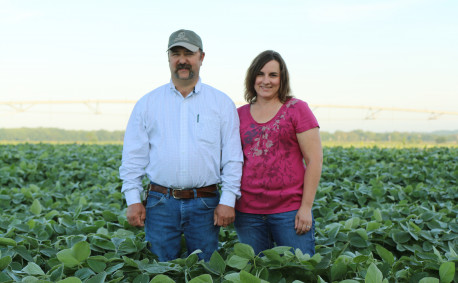
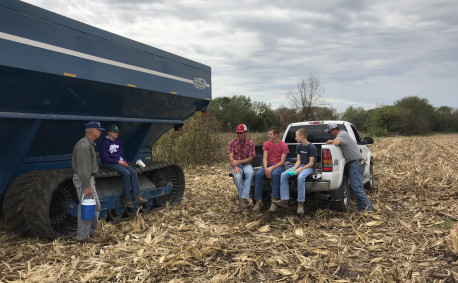
Kent is the fifth generation of his family to run the farm. With his wife (also a fifth-generation farmer) and youngest daughter still on the farm, and several grown sons who lend a hand during wheat harvest, the farm remains a family operation. Looking back, Kent is grateful for the opportunities his farm life has afforded him and his family.
“It’s been a great way to raise a family. The children learned responsibility and a strong work ethic at an early age. Hopefully that’s something that sticks with them for a lifetime,” he said.
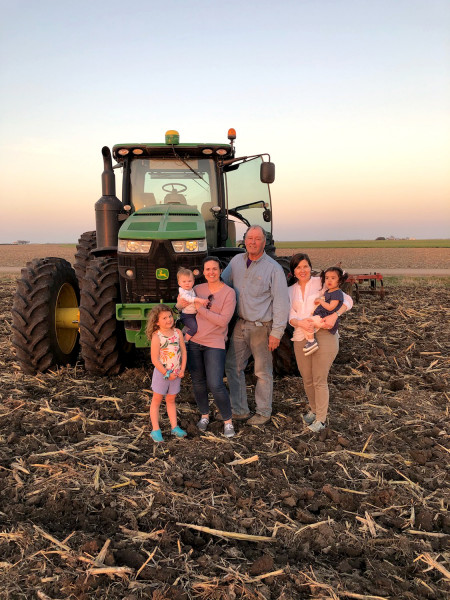 Although Kent isn’t sure which, if any, of his children might be interested in taking over the operation one day, he’s committed to preserving the land for posterity.
“Farmers are the foremost stewards of the soil and we take great care to pass the soil onto the next generation in better shape than we found it,” he said.
Although the future isn’t certain, the rhythm of the farm remains. And at the end of the season, Kent always finds his work fulfilling.
“I especially enjoy harvest time. Even though the hours are long, often accompanied with some degree of fatigue and stress, there’s a wealth of satisfaction and gratitude that can be gained at the end of the day, and the end of the season. That’s what it’s all about and what it takes to sustain this farm into the next generation,” he said.
Kent farms about 1,600 acres in south central Kansas. The majority is dryland production, with a small portion of irrigated land.