A New Generation Brings Goats to Family Farm: Meet the Varner Girls
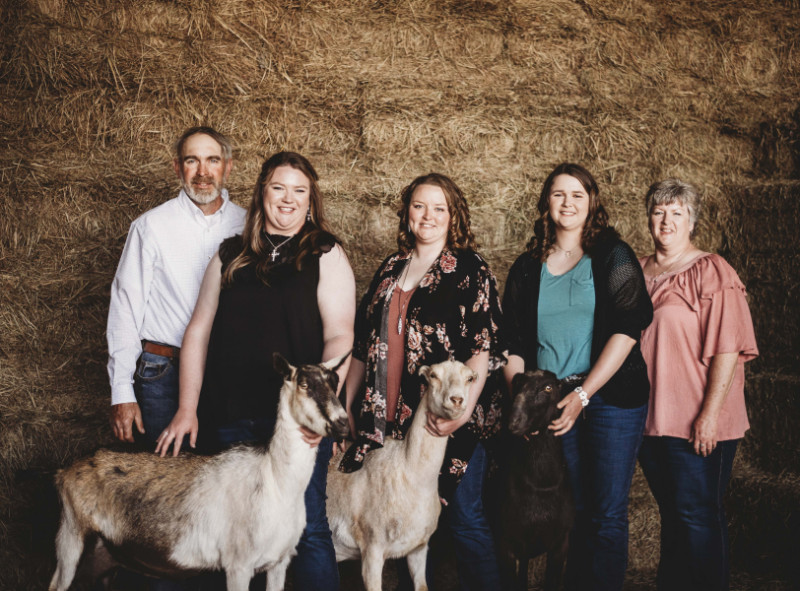
Outside of Towanda people can find a family farm that continues to grow and adapt as each family member finds their passion. Varner Farms began three generations ago and is currently operated by brothers Jeff and Calvin Varner, who raise row crops, hay and cattle. Calvin and his wife, Carla, a western Kansas native, have three grown daughters: Amy, Tara and Shelby. When they were younger, those three girls spearheaded their own operation: a dairy and meat goat herd called 3 Varner Girls that’s still running today.
I’m Shelby, the youngest sister, and I recently sat down with my two older sisters to talk about how our dairy and meat goat herd got started and how we each contribute to the menagerie.
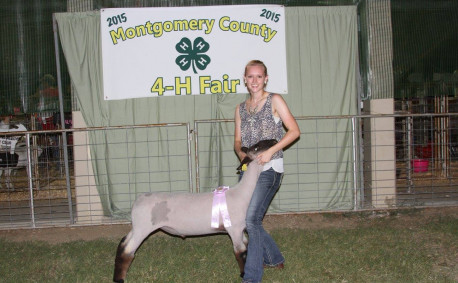
My oldest sister Amy wanted her own livestock project to run while our dad and uncle operated the family farm. All she had to do was convince our parents. Our mom said it was a group decision, but our dad said mom is the one who agreed. No matter how it actually happened, Amy got permission and started what would grow into 3 Varner Girls, which has been in operation for almost 13 years and has approximately 100 goats.
“The three of us did not start the goats at the same time,” my middle sister Tara said. “Amy started with three dairy goats and Shelby started with a meat goat wether (a castrated buck). I was the last one to start showing goats both meat and dairy.”
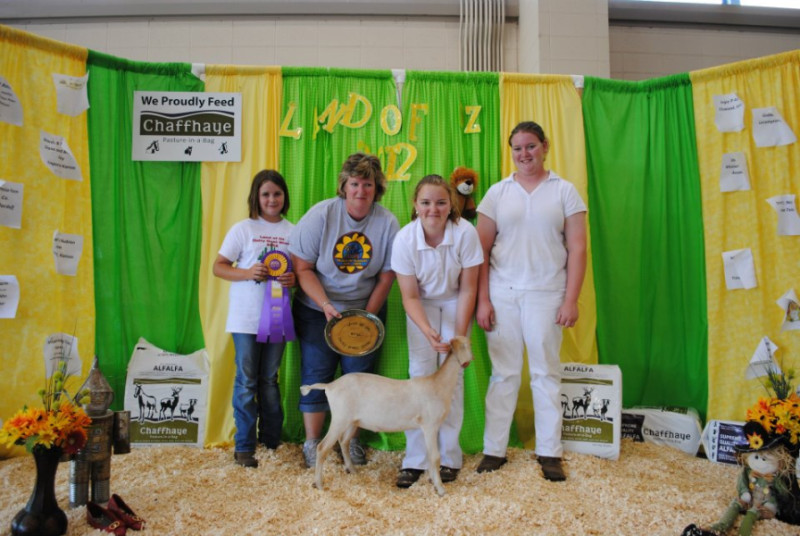 As we started raising meat and dairy goats, we furthered our knowledge, and each found our niches. While we love all our animals, we each have a favorite goat breed.
Amy loves her La Manchas which is the breed we started our herd with.
“They looked unique and weren’t super popular in Kansas. After having them for so long I love their temperament and ability to milk,” she said. “It’s not uncommon to see a couple of our aged does roaming out in the yard.”
“My favorite breed is called Experimentals. They are a cross between any American Dairy Goat Association breeds except Nigerian Dwarves,” Tara said.
The Nigerian Dwarves are my favorite because of their personality, they almost always act like teenagers and will rarely do what you are thinking they should.
Our herd also contains Alpines (dairy goat breed) and Boers (meat goat breed).
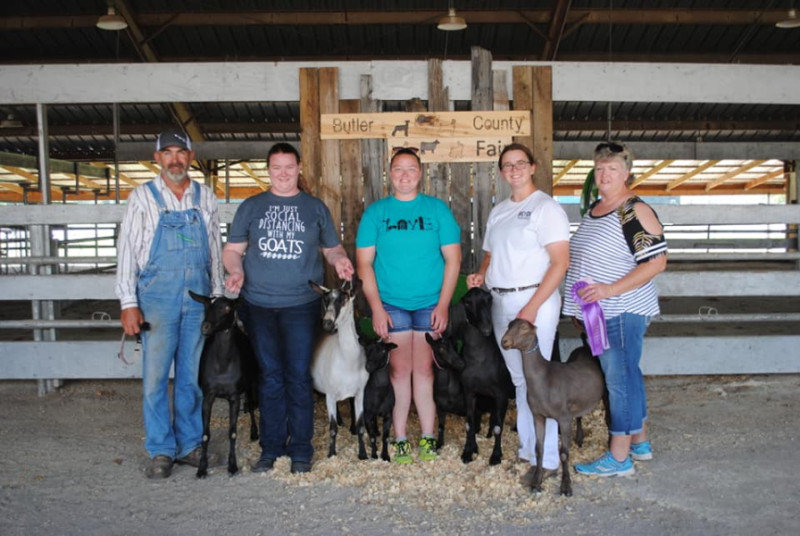
Changing Our Herd and Lives
Our lives aren’t the same as they were 13 years ago. We no longer all live at home or spend almost every moment of the day together, which has led us to find ways we can still help away from home.
Amy is currently a manager for Archer Daniels Midland in western Kansas but will soon be relocating closer to home. She assists with managing our goat herd by doing most of the paperwork and creating our breeding plans.
Tara, the only sister at home, is currently the full-time caregiver to the goats while also working for Butler County Farm Bureau doing Ag in the Classroom where she helps educate students on various topics related to agriculture.
I am entering my senior year at Kansas State University and try my best to go home when possible and help accomplish the jobs that take more than one person.
Appreciation of Agriculture
We are the fourth generation to grow up on our family farm, but we are the first generation to raise goats. Being around agriculture all our lives has created an appreciation for agriculture we all share. I was curious to know what aspect of agriculture my sisters enjoy the most.
“The thing I enjoy most is seeing the cyclical nature of it. Getting to watch the kids be born, grow up and become mature livestock,” Amy said.
Tara said, “I find joy in interacting with the livestock, whether it be with the cattle or goats.”
Personally, I appreciate being able to spend time outside with the livestock and people I love.
Advocating for Agriculture
We were heavily involved in 4-H growing up and still are involved today, but in a different way as we now serve as adult volunteers and help the youth in our county pursue 4-H and the goat project. Additionally, Amy and Tara serve on the Kansas Farm Bureau sheep and goat committee where they discuss topics related to the species, and I asked Amy why she does it.
“It’s a long drive to Manhattan to participate, but I wanted to make sure that goats had a voice if issues were to arise,” Amy said. “A lot of the people in the dairy goat sector are newer in agriculture and may not know what Farm Bureau does. By having multiple views in agriculture and a passion for goats it made sense to be on the committee.”
We also give tours to anyone curious about what we do. I enjoy getting to help people understand more about agriculture and love getting to help them see the passion my dad and uncle have for the industry.
Our Goat Milk Products
When time allows, we also make products with our dairy goat milk.
“We make soap, lotion, cheese and homemade goat’s milk ice cream and sometimes we will experiment and make other fun things,” Amy said.
Tara added, “I make a cheese that is then sold and dehydrated to make dog treats.”
Agriculture has always been valuable to us as we have grown up on a family farm and transitioned to finding our own passions in agriculture. We appreciate people who reach out and ask us questions because their curiosity gives us an opportunity to share what we love about what we do.
More About
Favorite Food:
- Amy: “My favorite food is probably ice cream.”
- Tara: “I am always ready to eat chicken alfredo.”
- Shelby: Ice cream is also a favorite, but mine is probably pizza.
Favorite Thing about Kansas:
- Amy: “It’s where my friends and family are. It also has so much variation from the Flint Hills in the east and the flatlands of western Kansas and of course watching the beautiful sunsets.”
- Tara: “I also love the diversity of landscape in Kansas and the amazing sunsets.”
- Shelby: I would have to agree with both as to my favorite things about Kansas.
This article was written by Shelby Varner, an intern with Kansas Farm Bureau.
Meet More Kansas Farm Kids