This Small Kansas Farm Family Wants to Have a Major Impact
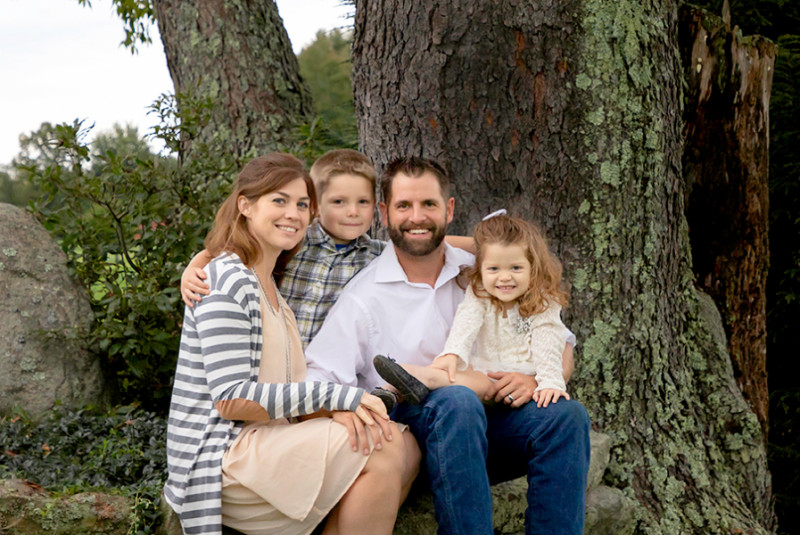
Jacob and Danielle Stenger see many issues with our food system — one of which is fewer people farming than ever before. The young couple wanted to change that, starting with their own family.
“Honestly, it’s probably one of the main reasons we dove into farming, because we really wanted the kids to be connected to where their food comes from — animal husbandry and taking care of the land,” Danielle said. “That’s given us our motivation.”
“The goal is to become more self-sufficient,” Jacob added.
The couple met in Washington, D.C., where they both worked as emergency responders. After they had their son, they moved to Cincinnati to be closer to Jacob’s family. Danielle aspired to be a nurse anesthetist and had her heart set on providing care in a rural area. After having their second child, Danielle got a job offer in Kansas and the family relocated. Eagle Ridge Ranch near Milford was born.
“I love it out here,” Danielle said. “I grew up in rural Pennsylvania. That’s probably why I was attracted to rural Kansas. It has a similar feel. There’s a lot of farming and agriculture here and the system is more friendly toward farming, even though we do things a little bit differently.”
Their different approach is a focus on regenerative agriculture.
“The concept of regenerative agriculture is to keep the natural cycles and rebuild the soils,” Jacob said. “It’s about letting nature do its own thing. Some people look at it as hipster, but I’m not a tree-hugging guy.”
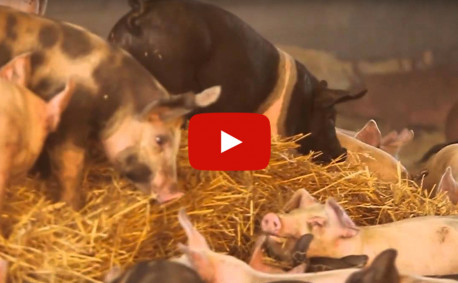
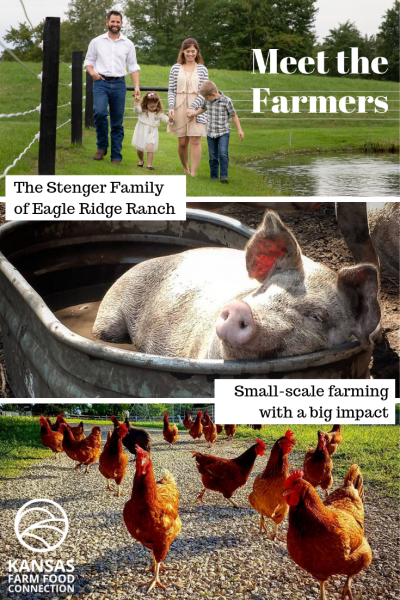
They rebuild the soil by leveraging the different animals they keep — chickens, ducks, forest-raised hogs, grass-fed lamb. Manure from the chicken coops is used to fertilize their pasture. The hogs root up their wooded areas, clearing unwanted saplings and stimulating seed growth. As the lambs graze, they tamp down forage, which helps feed the soil.
“Poly-culture is the best way to describe it,” he said. “The species are all interconnected in a good way.”
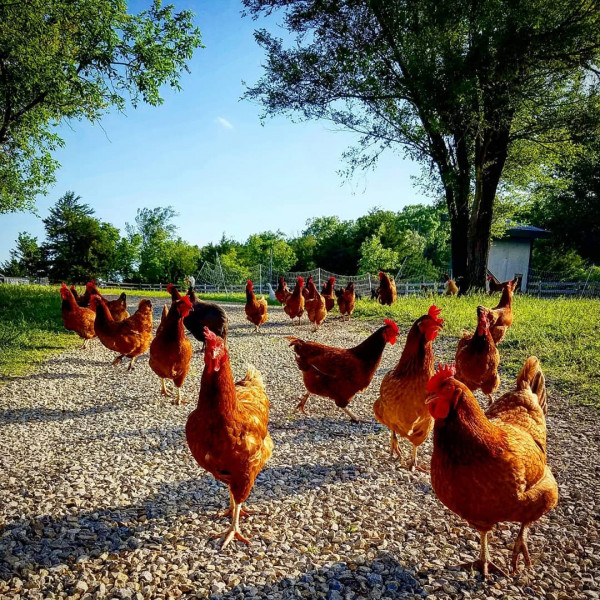 Jacob moves the animals every day, so they are grazing in and fertilizing different parts of the farm. It’s a big switch from working as an emergency responder, but Jacob says he loves it.
“Firefighting was my whole life. It’s what I wanted to do. Most people walk away from that passion and don’t know what to do with themselves, but this style of farming is a challenge in a good way,” he said. “It makes you think out of the box in an exciting way. We’re constantly rigging up contraptions, learning how to build things, watching nature, just doing day-to-day chores where you have to think on the fly. Some people call it agri-therapy.”
In addition to providing their own food, the farm has provided a great education for their kids. The children are homeschooled and help on the farm as part of their curriculum. They’re also learning a lot of life skills.
“We want them to develop a strong work ethic and an appreciation for where their food comes from,” Jacob said. “They’re learning so many life skills — personal responsibility, life and death.”
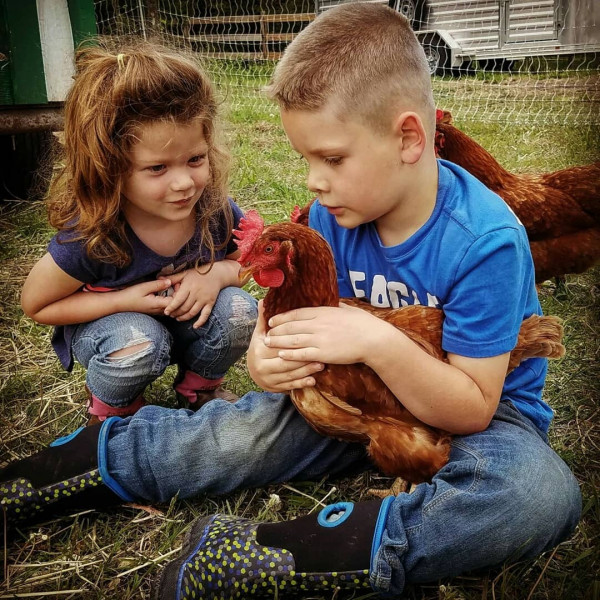 At dinner, they thank the animals for their meals.
“It’s ‘Thank you, pigs. Thank you, chicken,’” Danielle said. “They know where their meat comes from. And, they know those animals had a good life. We get to see that whole cycle and know we’re doing whatever we can to have the best meat.”
As Danielle told colleagues about what they were doing on the farm, a lot of them were curious. Danielle shared eggs with them. Soon, they wanted to buy eggs and meat from them. Some asked if they’d consider raising other animals like goats. (They tried. They were not fans.)
“That was the launching point for growing,” Jacob said. “We started with chickens. People requested the lamb, so we started raising the lamb.”
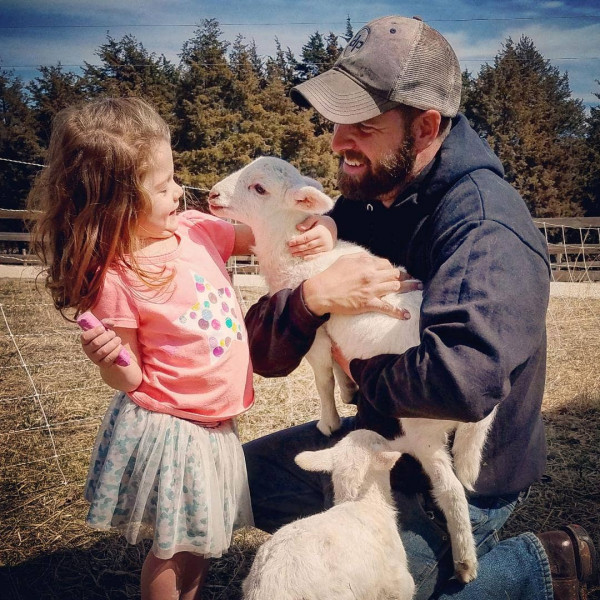 Making the move to becoming a retail operation isn’t always easy.
“When you’re selling meat, you have to keep records of everything,” Danielle said. “There are a lot of legal things you don’t normally think about.”
Plus, people don’t always understand how much it costs to grow food.
“You go into a grocery store and you see a 99-cent chicken breast. It’s so hard to be able to produce chicken for even close to that,” Danielle said. “People think the local food should be cheaper, but small farmers can’t produce things that cheaply. There are all these hidden costs, in addition to time.”
Despite all the effort, the couple said it’s worth it.
“At the end of the day, if I had to put a price on the land we live on, the lifestyle, the life for my children, it’s hard to calculate,” Jacob said.
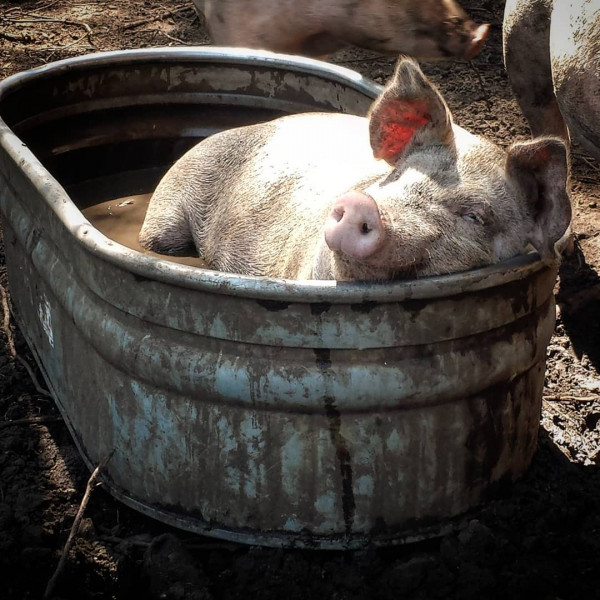 For the most part they don’t have to buy chickens, pork or eggs. They eat their own. They have a garden for fruits and vegetables, although they still buy produce. They also want to introduce others to this way of life, whether through their retail efforts, sharing their story on social media, or a bit of both as customers often follow the animals on Instagram.
“They’re involved in the process,” Danielle said. “They can come out and feed them, pet them, scratch them.”
Although theirs is a small-scale operation, Jacob hopes they’ll have a bigger impact in their community.
“We won’t feed the world, but maybe we can empower others to feed themselves,” he said.
If you’re looking for some empowerment, or even a glimpse at what life on a small family farm is like, follow them on Facebook or Instagram.
More About
- Favorite Thing about Kansas: “The people, the culture and family feel.” (Both)
- Favorite Food: “Seafood, ironically as we live in the middle of Kansas.” (Jacob), “Chocolate and grilled steak.” (Danielle)
- Hobbies: “We enjoy spending as much of our time as we can here on our land working to improve and enjoy it. Danielle enjoys riding our horses and working with the kids on the horses, too.” (Both)
Meet More Kansas Farm Families