Hydroponic Lettuce Takes Off in Northwest Kansas
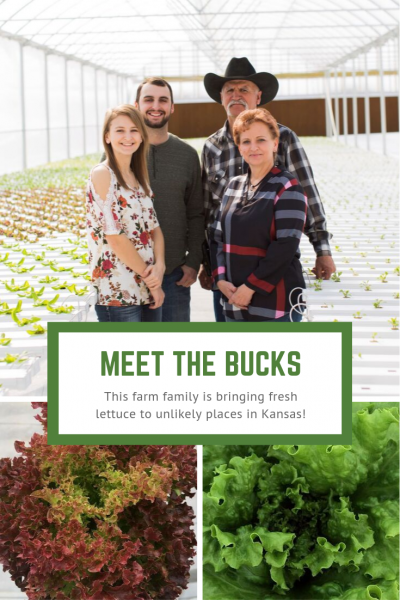
Northwest Kansas isn’t an area you’d describe as lush. In fact, it’s often in drought. But that didn’t stop Dan and Carol Buck from deciding to grow lettuce there. It’s out of the ordinary, but much of their journey was.
The couple owned a trucking business for 20 years. Dan crisscrossed the Midwest delivering seedcorn to farmers. He loved talking to his customers and one day mentioned he and Carol were looking for a place.
“It must have been meant to be because before I got home, the realtor had contacted Carol,” Dan said.
The property was set up beautifully, with outbuildings, corrals, and plenty of pasture as well as 35 acres of crop ground. Dan and Carol founded 4B Farms and started raising horses, Australian Shepherds, and meat goats. They wanted to do more.
Dan had picked up a lot of insight driving over the years. He often heard radio shows address the need to grow more food for the growing population. He also heard customers talk about the challenges of commodity crop prices.
Dan and Carol wanted to help — to find a niche and feed the world, or at least their neighbors. The couple researched various options like raising fish and growing vegetables, but drought would be an issue. One day Carol came across hydroponic greenhouses online and was intrigued.
In an arid part of the state where ranching and grain make up about 81 percent of their county’s agricultural output, looking into lettuce was a maverick move. The previous owners had raised rabbits and ostrich on the farm, so Dan and Carol figured it was in good keeping with the spirit of the farm.
“This farm has done things a little out of the ordinary and we’ve continued that tradition,” Dan said.
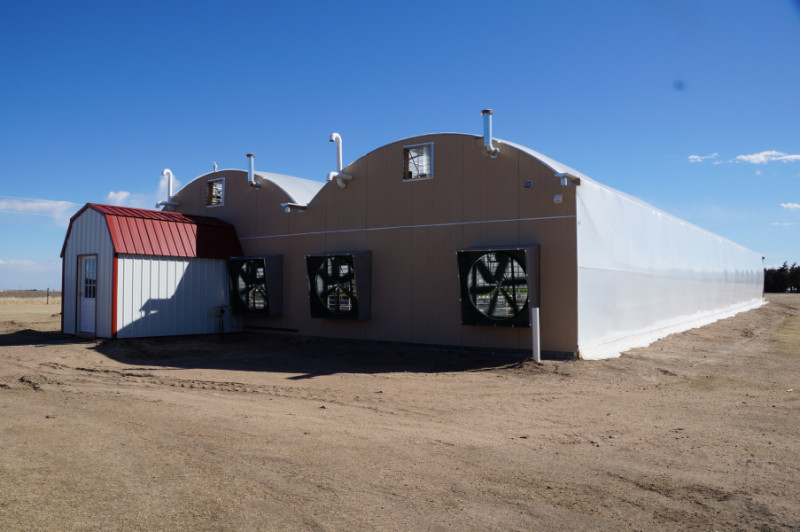
 They built their first greenhouse themselves and worked with a company specializing in hydroponics. The company has horticulturalists on staff, so if there’s ever an issue, help is a phone call away. And they’ve called. A lot.
“There’s been a huge learning curve,” Carol said.
If something goes wrong in the greenhouse, they have to act fast because plants can die within an hour. The balance of nutrients has to be just right, and algae are a major concern. Dan and Carol have to constantly monitor and adjust the environment to ensure they grow healthy plants.
“It’s extremely labor intensive,” Carol said. “You’re pretty much tied to it seven days a week from daylight until dark because things go south so fast, especially when it’s so hot during the summer.”
There is an upside, though.
“Come winter time, when people are working in snow, we walk in there and it’s 65 degrees,” Dan said.
Still, lettuce was a gamble.
“We didn’t know if it was going to fly in rural northwest Kansas,” Dan said. “We thought it would go a little bit, but figured most of our sales would be in larger cities like Denver, Wichita, or Kansas City. It has been very, very well received in this small rural area simply because this is the only place you’re going to get fresh lettuce all year round.”
They sold their first heads at a home and garden show in Colby and grew from there. Today, the couple distributes their lettuce to local grocery stores, restaurants, hospitals and a few schools.
But they think of their role as farmers more as caring for their community.
“We’re taking care of the people locally and now they’re taking care of us,” Dan said. “Taking lettuce to schools, feeding young children, going to nursing homes and going to hospitals — that really makes us work hard to provide a safe, clean and nutritional product for people.”
 And people have noticed, stopping them in the street to say their lettuce is the best they’ve ever had. That gratitude keeps them going, despite the long hours.
“That makes you feel good — that you’re feeding your neighbors and they appreciate it. And it’s healthy. It’s good for them,” Carol said.
Dan and Carol hope to do more than feed their community. They hope to educate them, too.
“One of the important factors in today’s world is that so many people honestly have no clue where their food comes from,” Carol said. “So many people are so far removed from the farm these days that they don’t understand that the food in the grocery store doesn’t magically appear there. Someone somewhere had to grow it.”
The Bucks encourage people to see for themselves how their lettuce is grown and harvested and visit their greenhouse. If you can’t swing a trip to Grinnell, visit them online or on Facebook.
More About
Fun Facts from 4B Farms
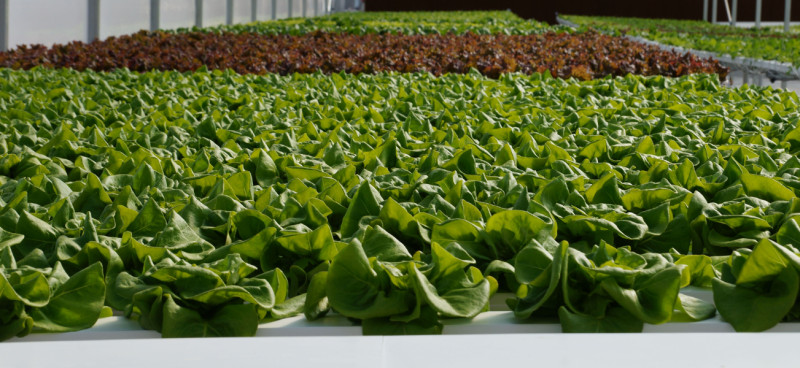
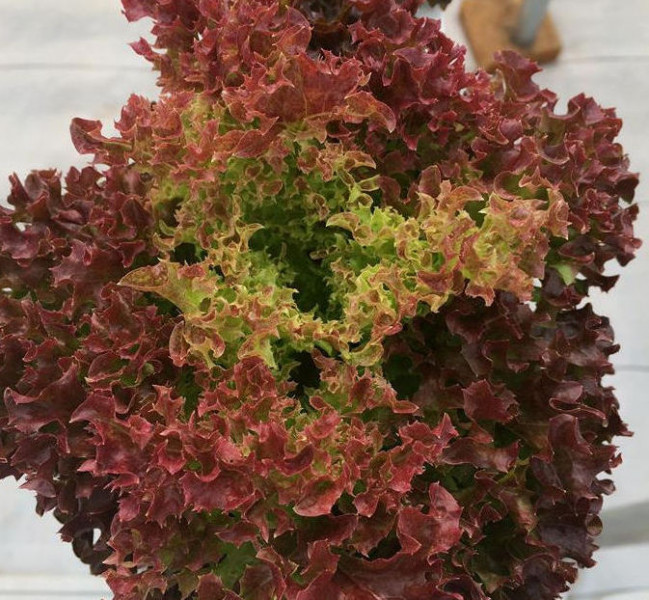
- The Bucks grow five different kinds of lettuce, plus some herbs.
- Plants in the greenhouse are at various stages of growth, which means they’re always harvesting.
- Dan and Carol plant and harvest 1,000 heads of lettuce a week.
- Lettuce requires about 50 gallons of water when grown in soil, but only 1 to 2 gallons when grown in a hydroponic system.
- Hydroponics uses 85 percent less water and 70 percent less soil than soil-based growing.
- Hydroponic lettuce usually takes 40 to 50 days to mature. When grown in soil, it takes 10 to 15 days longer.
- Lettuce that keeps its root stem intact (like in hydroponics) stays fresh weeks longer than lettuce with its stem cut off (like you typically find at the grocery store).