Filling a Beef Niche in the Flint Hills
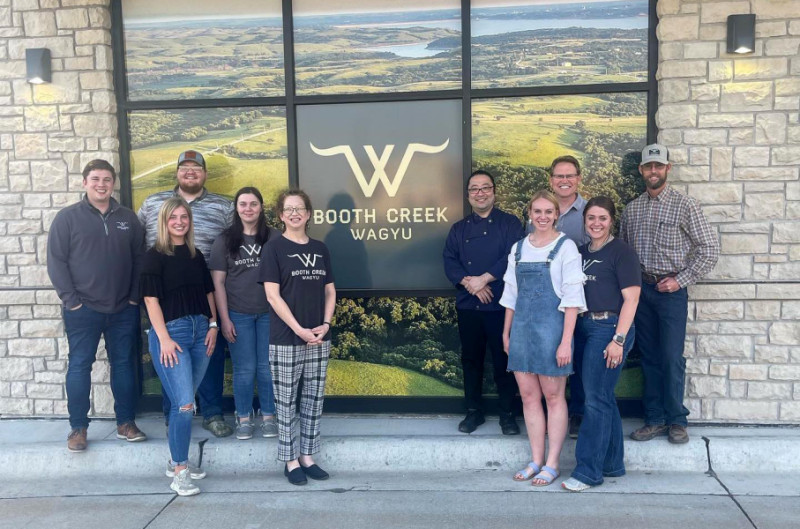
Just north of Manhattan on 2,000 acres of hills and creek bottoms lined with trees sits Booth Creek Ranch, a slice of paradise Dave Dreiling purchased in 2005 to serve as a whitetail deer hunting preserve. These days, however, you’ll find more than deer and other Kansas wildlife roaming his parcel of tallgrass prairie — it’s now home to hundreds of Wagyu cattle as well.
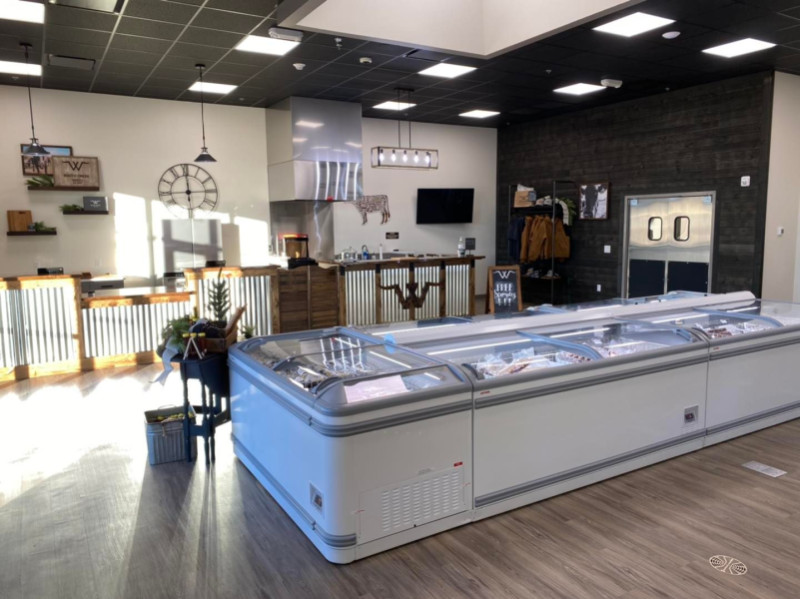
The businessman and restauranteur sells the premium beef from the herd at Booth Creek Wagyu, a Manhattan storefront he opened in 2021.
What Is Wagyu Beef?
Wagyu is a specialty breed of cattle from Japan. In fact, “Wa” means Japanese and “gyu” means cow. Wagyu cattle produce outstanding beef with a high percentage of intramuscular fat. This generous marbling has a low melting point, which results in a steak that’s not at all fatty, but practically melts in your mouth with a rich, buttery flavor.
“It’s the Cadillac of meat,” Booth Creek Account Manager Tyler Dreiling said. “The flavor and texture put it in a league of its own, and that’s why we love offering free samples at our store. The reactions are a lot of fun to watch.”
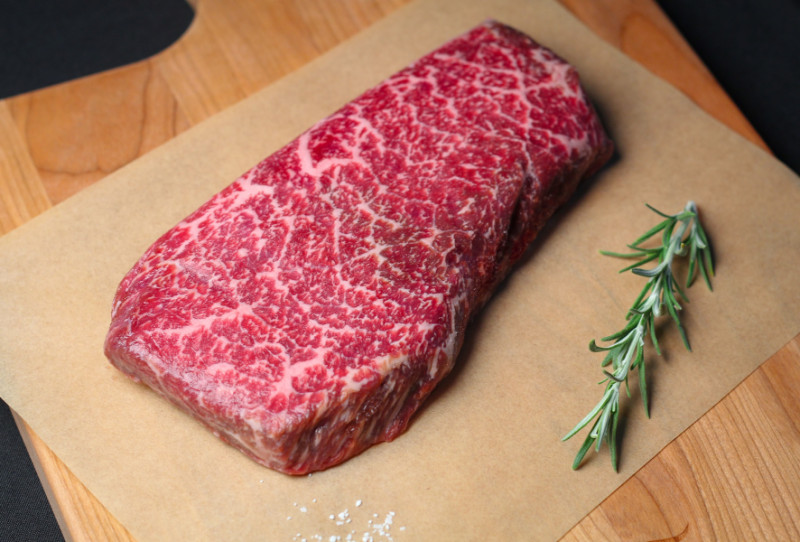 In addition to its prized flavor and texture, Wagyu beef contains higher concentrations of oleic acid and therefore a higher proportion of heart-healthy monounsaturated fatty acids. That’s right: Your Wagyu ribeye can actually have a positive effect on cholesterol levels.
The breed is rare here in the States, accounting for less than 5% of the cattle we raise due to Japan’s ban on Wagyu exports in 1997. Dave was introduced to the breed by his uncle, who has a Wagyu seed stock business in Abilene. After Dave attended his first Wagyu auction in June 2020, it wasn’t long before a herd arrived at the ranch.
A Better Business Model
Wagyu beef often tends to appear as a budget-busting menu item in upscale restaurants, but the company’s goal was to streamline the process in a way that makes it feasible for a more farm-to-table business model.
“Grocery stores were really the only option for buying meat in Manhattan at the time we opened, and for such a great, ag-focused community, that’s crazy,” Tyler said. “Obviously the products we offer are a little different from your traditional meat market, but we really enjoy the opportunity to educate customers on Wagyu.”
The company also saw ample room to simplify the process. First, it points to what it calls the “tallgrass prairie advantage,” whereby the area’s protein-rich grasses and high-quality grains take care of the cattle’s nutritional needs.
Next, it concentrated all production, processing and sales efforts in a 20-mile radius, drastically reducing costs. Those savings get passed down to customers, which include several area restaurants in addition to shoppers who visit the retail store.
 “There are some inefficiencies within the Wagyu industry that have been stunting its growth in the United States beef market,” Tyler said. “We saw those challenges as an opportunity.”
As it turns out, reducing the distance between the ranch and processing facility is a strategy that benefits more than the bottom line — long journeys are more stressful for the animals and decrease the quality of the meat.
“We like that our cattle never have to travel long distances, which can really impact marbling,” Tyler said.
Do You Wagyu?
If you’re dying to try some Wagyu after reading this and aren’t in the Manhattan area, you’ll be happy to know Booth Creek ships nationwide. Brisket, ground beef, roasts, ribs, hot dogs and even snack items like jerky and summer sausage complement the selection of steaks.
Your shipment will arrive insulated in biodegradable materials, because Tyler has a “beef” with plastic pollution after his experience as a divemaster in Maui.
“Being in and around the ocean gives you a much different perspective regarding how we’re treating our planet,” he said. “More than 8 million tons of plastic are dumped in the ocean each year, and that’s completely unsustainable. I’m glad we’ve been able to source materials that are affordable enough for us to set that example.”
In-store, you can try before you buy in the testing kitchen if you’re having trouble choosing between the platinum, gold and silver label selections for each item, which indicate its level of marbling.
Tyler won’t try to sway you toward one in particular — he lets the meat speak for itself.
 “There’s not much we can say about Wagyu that a bite of steak won’t take care of. It’s our favorite part of the job. We hope more people consider it for their holidays, special occasions or just to treat themselves.”
To learn more about Wagyu beef and its interesting history, visit the Booth Creek Wagyu website. While you’re there, you can browse the company’s products and give its social accounts a follow to “beef up” your timeline with specials and farmers market appearances.
More Moovers and Shakers