Different Types of Bread

Flaky, crispy, chewy, soft — there’s a lot to sink your teeth into when it comes to bread. Maybe that’s why we loaf it so much.
Whether you holla for challah or gotta have ciabatta, we break down 14 different kinds of bread and the traditions and techniques behind them. It’s the yeast we could do!
The Basics
A basic bread recipe calls for a simple mixture of flour, water, yeast and salt. The temperatures, ratios and resting time can yield very different loaves. Wheat flour is often used to make bread because its proteins form gluten, which creates structure in the dough. With a variety of flours available, you can create different textures and flavors. Even starchy potatoes can be used to make potato breads, which typically have a fluffy texture and neutral flavor. Different leavening agents such as baking soda can also be used instead of yeast.
Baguette
Perhaps the most recognizable and celebrated bread the world over, the French baguette is a long, thin, pointy loaf with several distinct score marks. Tear into its flaky, crispy crust and you’ll be rewarded with the crunchy sound, the chewy texture and complex flavor.
Several myths surrounding the bread’s origins are in circulation, but an agreed-upon fact is that the term baguette, which means “baton” or “wand,” began to be used for the bread in the 1920s.
To make a classic version, you’ll need strength, patience and a few specialized tools, in addition to flour, water, yeast and salt.
Sourdough
Sourdough requires a starter, which is a fermented mixture of flour and water. Popularized during the pandemic, sourdough has been a staple for thousands of years. This rustic bread can be traced to ancient Mesopotamia, and scientists have found evidence of starter being used as early as 3700 BCE.
In America, miners relied on sourdough to make bread and other baked goods during the Gold Rush because they could use the starter to make bread in remote locations where they didn’t have ready access to yeast. That tradition carried westward to San Francisco, which is often considered the sourdough capital of the U.S.
To make a starter, let the mixture sit, feeding it periodically, until it gets bubbly. Building a starter from scratch can take several days, or you can continually feed a mother starter and break off a portion when you’re ready to bake a loaf.
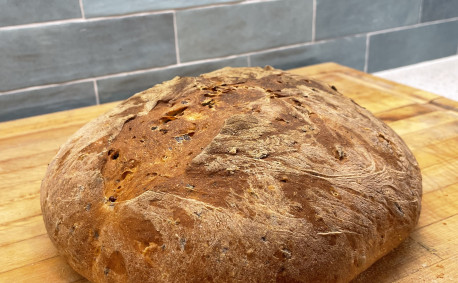
When you’re ready to bake, combine your starter with flour, water and salt, then work it with your hands and let it proof before baking. The result is a crunchy crust with an airy interior, or crumb, and a tangy taste.
Ciabatta
Really? This bread wasn’t invented until 1982? Ciabatta believe it! Arnaldo Cavallari, an Italian baker and miller, said he wanted an alternative to French baguettes, which were prevalent in Italy at the time.
Ciabatta dough is considered a wet dough. It has a lot of water, which creates steam when baking and helps build its light, airy crumb and thin, crisp crust. Like sourdough, ciabatta can be made using a starter to add depth and texture.
Challah
The word challah appears in the Hebrew Bible, where it refers to a portion of dough set aside as an offering. The braided, enriched loaf now associated with challah bread developed much later in Europe. Today, it is commonly served for Shabbat, the Jewish Sabbath, and on holy days such as Rosh Hashanah.
This shiny loaf includes eggs, oil and sweetener, in addition to flour and yeast. These help give the bread its smooth texture and golden color. Its signature braid came about in the 1400s.
Today, there are many variations worth trying!
Flatbreads
Many cultures serve a thin bread called a flatbread whose origins are believed to trace back approximately 14,000 years. Different traditions have distinct breads within this category. Some of the more well-known varieties include the following.
- Pita: This Middle Eastern flatbread is cooked at high temperatures, which creates its signature pocket. Often filled with vegetables, meats and more, this bread has a slight rise, giving it a soft crumb.
- Naan: Indian restaurants carry this soft, chewy South Asian flatbread, which is made using a special oven called a tandoor. The high temperatures of the tandoor create bubbles in the dough.
- Focaccia: Among the thicker flatbreads is this Italian variety with signature divots made by pressing into the dough with your fingertips. It incorporates olive oil, which fills the indentations and gives the bread a rich flavor.
- Tortilla: One of the most widely available flatbreads in the U.S., tortillas have roots in Mesoamerica, where Indigenous people made them from maize. Wheat-flour tortillas were developed later in northern Mexico. Today, corn and wheat tortillas are widely enjoyed.
Crumpet
This soft, flat cake known for its craters (which help hold clotted cream, jam and other delicious toppings) is a staple at British teatime. Although the crumpet dates to the 1600s, its current form took shape in the 1800s.
Authentic recipes call for flour, milk, yeast and baking powder. Like pancakes, the batter is poured onto a griddle, then cooked in rings, which give them their circular shape. They are traditionally cooked on only one side. The bubbles that form when cooking create the craters.
A cousin to the crumpet is the English muffin, which was popularized in America in the late 1800s.
Soda Bread
Across the sea from Great Britain is the home of another bread tradition: Irish soda bread. Instead of yeast, soda bread uses baking soda as its leavening agent. This was culturally significant during the famine of the 1840s, when it was difficult to find yeast. Baking soda and a soft variety of wheat were used to create this simple, rustic loaf.
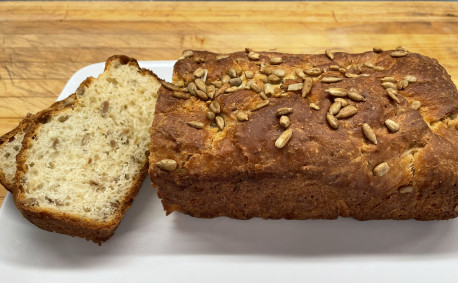
Typically, soda bread also incorporates flour and buttermilk. You can customize your soda bread recipe to your taste — sweet or savory, soft or dense — but the big question is whether you like raisins. (If we must, we’re team currants.)
Pumpernickel
This dark, dense bread is made using rye, which gives it a sharp taste. It originated in Germany in the 1500s. The traditional bread takes 16 hours to make, but American versions are more friendly to modern schedules and kitchens.
Brioche
Another French specialty bread is brioche, a very soft and slightly sweet bread.
To give you an idea of just how soft and sweet brioche is, French philosopher Jean-Jacques Rousseau wrote, “Qu’ils mangent de la brioche,” which was erroneously attributed to Marie Antoinette and translated as, “Let them eat cake.”
Made with flour, yeast, butter, eggs, milk and sugar, it can be baked in different forms such as a single loaf, fluted individual rolls, buns and more.
Hawaiian Rolls
Although these sweet rolls are linked to Hawaii, they trace their origins to pão doce, a sweet Portuguese bread (not to be confused with sweetbreads, a term for organ meat!). When Portuguese laborers came to Hawaii for work, they brought this tradition to the islands. Its popularity soared, and it became a staple for residents and a souvenir for tourists.
With flour, yeast, brown sugar, egg, vanilla and butter among its ingredients, the recipe reads more like a dessert than a bread. Many recipes also call for pineapple juice to add a soft texture and a tangy, sweet flavor.
Bagel
This distinct round breakfast bread established itself as a mainstay in New York delis before becoming widely available in grocery stores across the country. Although its origin isn’t entirely known, Jewish bakers in Poland likely developed this distinct round bread, possibly as early as the 1200s.
Bagels are typically made using bread flour, which has a higher protein content than all-purpose flour. They are cooked twice — first boiled, then baked — which creates the chewy texture.
No matter how you slice it, we’re bananas for bread. And perhaps we’re biased, but we think Kansas is home to the best bread ingredients. We are the Wheat State, after all!
Fun Bread Recipes to Try