How Innovation on the Moreland Farm Helps It Grow

In Southern Kansas, red dirt roads are a tell-tale sign the Oklahoma border is nearby. For James Moreland, they mean he’s close to headquarters.
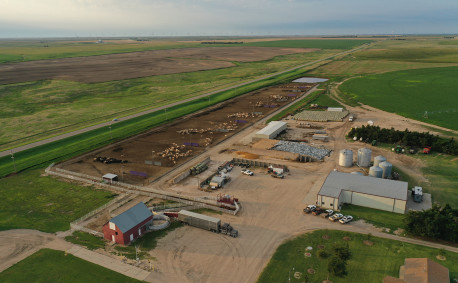
James is a fifth-generation farmer based in South Haven who grows soybeans, wheat and corn, and raises a herd of beef cattle on both sides of the Kansas-Oklahoma border.
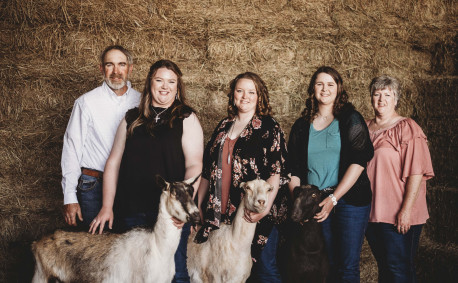
“Everyone from my grandfather, who’s 93, to my two younger brothers, dad and mom — we all farm in a partnership together,” James said. “We have a vast difference in ages and different ideas all coming back together.”
James and his wife, Liz, spend their days raising their three daughters and checking and caring for fields. Coming back to the farm had not been in James’s plan, but when the opportunity arose, he took it.
“I wouldn’t say it was always what I wanted to do, but we were raised in it, and the opportunity was available when I came back from college,” he said. “To come back and grow with the operation — we have been fortunate to be able to continue that.”
 James enjoys watching the operation grow and strives to keep up with advances in agriculture. In a world that’s always changing, agriculture is no different, and Moreland Farms is always looking for new practices to try.
“Innovation on our operation is a big part of what we do,” he said. “We are pretty keen on looking for something different, something new, something better. Just because we have always done something this specific way doesn’t mean we can’t do it better.”
James does better by testing and checking the land, making sure the soil has the proper amount of nutrients like nitrogen, phosphorus and potassium, and using the data he collects to make decisions about inputs like fertilizer, pesticides and water.
“We put a lot of time and effort into precision agriculture,” he said. “Our goal is to use our resources wisely and keep them as finite as possible.”
 Pest management is another area where James wants to improve.
“I think it’s important that we don’t let things like weeds, insects and diseases get so bad that we have to fight from behind,” he said. “If we can stay together and work with the ecosystem and keep ahead of the problems, that helps not only the pest management system but the environment in general.”
Innovation and sustainability work hand in hand. James sees sustainability as making sure his family can continue farming safely and effectively, and pesticides are part of that sustainable practice.
“The regulation and testing of pesticides from the EPA is extensive, and we need those to raise a quality crop,” he said. “The same pressure that gardeners face from bugs eating leaves — farmers face that same pressure on a larger scale. We have to take care of that if we’re going to grow enough food to feed the world.”
The science behind EPA’s regulations gives James confidence that what he is putting on his fields is safe for our food supply today and for the years to come.
“I have faith in the safety of our chemicals,” he said. “Pesticides are tools that are proven.”
Through tools like pesticides and innovative practices such as yield mapping, sustainable farming continues to evolve. A secure food supply in the future will rely on farmers’ ability to adapt.
“I’m passionate about farming because I want the future to be here,” James said. “I think food production is important for our society, and I’m happy to be a part of that.”
This story was written by Madelyn Lueck, an intern with the Kansas Soybean Association.
Meet More Kansas Farmers