Fostering Sorghum's Future Through Research, Innovation and Community
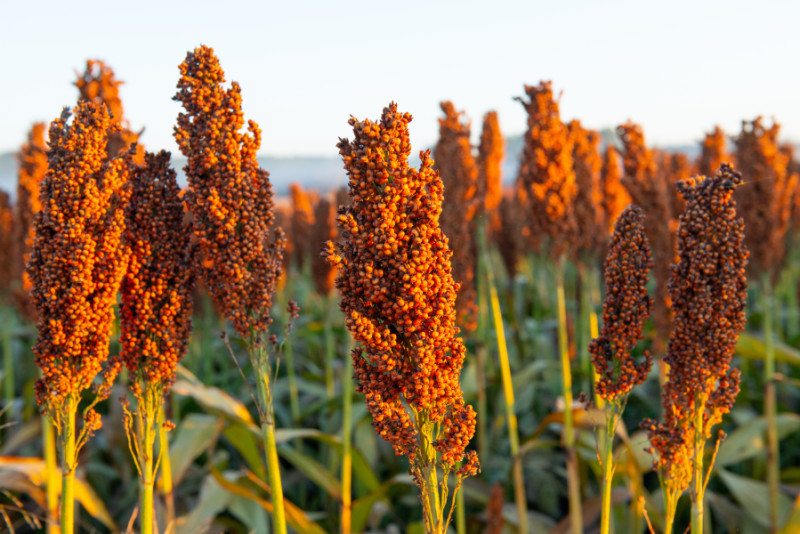

In agriculture, cutting-edge research takes place in test plots, public and private laboratories and meeting rooms long before a new technology or improved variety ever reaches a producer’s farm, but its results impact every acre. In the sorghum community, farmer-directed research remains a key pillar that strengthens the crop and creates new opportunities for the farmers who grow it.
At the Center for Sorghum Improvement in Manhattan, managing director Sarah Sexton-Bowser works to advance that future by connecting researchers, industry partners and producers to create meaningful improvements for sorghum.
Growing up on her farm in central Kansas, agriculture was never just a simple career path for Sarah; it was her way of life. From a young age, she learned firsthand the importance of contributing to a family farm and understanding the successes and challenges that come with each growing season.
“It truly meant everyone was expected to chip in, contribute, and also own the success and the hardships of whatever the crop year and the livestock year brought,” Sarah said. “There was something really special about growing up in a family and feeling that your role in that family was meaningful and a part of making the overall farm work.”
Sarah’s early experiences shaped her understanding of agriculture and eventually led her to become involved in organizations like 4-H and FFA. Through those organizations, she developed her leadership skills, learned how to communicate effectively and even discovered the importance of serving others.
Her involvement in FFA, particularly through extemporaneous speaking and parliamentary procedure contests, helped her build skills that would continue to impact her career.
“Those skills have time and time again been available to me to come alongside groups of agricultural leaders and stakeholders, and be able to actively contribute and advance the goals of a given group,” Sarah said.
That genuine passion for agriculture led her to Kansas State University, where she studied agricultural economics. Her education provided her with the ability to understand not only what was happening within the agriculture industry, but also why those things were happening.
Her curiosity and desire to make a difference eventually brought her to the sorghum industry.
“Sorghum was a ripe frontier to do that — working [for the sorghum industry] in Kansas really means you are working at the heart of where the action is,” Sarah said.
Kansas plays a major role in the sorghum industry, producing about half of the nation's crop, or 185 million bushels annually. Because sorghum is often grown in some of the most water-limited environments, such as western Kansas, the crop provides farmers with an important tool in their crop rotations.
Working in the sorghum industry often requires creative thinking and collaboration to continue advancing. Grain sorghum may have a smaller U.S. acreage footprint than major commodities like corn or soybeans, but that's not always a disadvantage.
“We have an ability to be nimble, agile and responsive to market needs,” Sarah said. “To be able to roll up the sleeves, punch above our weight class and work for the underdog are why I have a lot of joy in my work with sorghum.”
One of the most exciting areas of sorghum research today is the collaboration between public universities and private seed companies working to better understand and leverage sorghum's natural genetic diversity to develop future improvements. Sorghum has a large collection of genetic resources available for research to study providing opportunities to discover traits that can benefit future varieties.
“What I've been most excited to do is to take the discipline that is required to understand the strengths of partners and be able to see a real development and intentional alignment within the public space,” she said.
This collaboration helps ensure research discoveries can move from development to practical applications in the field. However, successful innovations do not happen overnight. Sarah compares the research process to the preparation behind an athlete's success.
“I have a couple of softball players at home, and I see them over the course of the season at bat in a game maybe 20 to 30 times,” she said. “I see them practicing hundreds and hundreds of times leading up to those games. It is not any different for sorghum research and development.”
Behind every breakthrough lies years of testing, learning and improvement. While producers may only see the final result, countless hours of research and collaboration happen before a new opportunity reaches the farm.
Looking toward the future of agriculture, Sarah encourages students and young professionals to remain open to opportunities they may not see coming.
“Your future self will be different from your present self,” she said. “You may have different interests in the future; you will have very different skill sets in the future.”
Her own career reflects this idea, as she never expected she would manage a technical research investment portfolio. By continuing to learn and grow from her experiences, she found a way to contribute to the agricultural industry and the sorghum community.
For Sarah, success is not just about personal achievement; it is about being able to build a stronger agricultural industry and creating opportunities for the next generation and every generation to come.
“How do I grow people and grow community?” she reflected. “The way that I give back isn't just to myself directly, but really through growing the people in the sorghum space where we collectively can have a much greater impact.”
Through many hours of research, collaboration and commitment to the future, sorghum is continuing to grow as a crop with a genuine purpose, thanks to the work of individuals such as Sarah. Behind every seed, there is a story of innovation, resilience and the people working to create a better future for all generations to come.
This story was written Mindy Wells with Kansas Grain Sorghum.